Benefits of Co-Curricular Activities in CBSE Schools
Discover how co-curricular activities in CBSE schools enhance students' confidence, creativity, leadership, teamwork, and overall personality development.
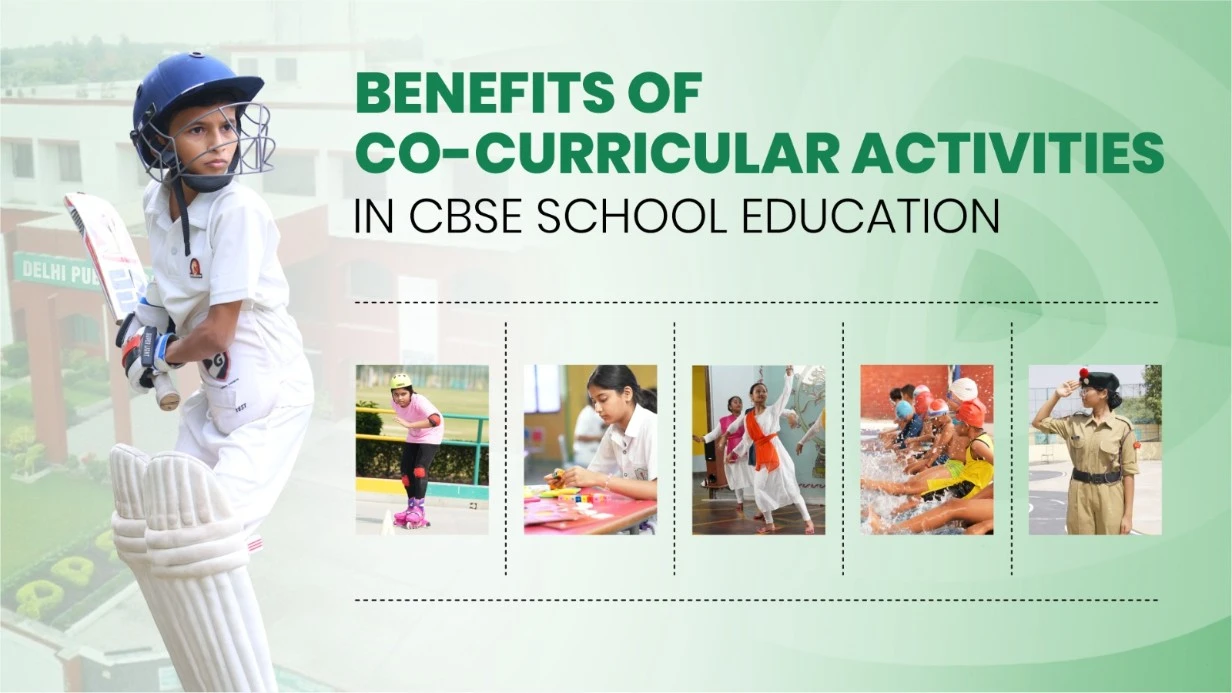
Benefits of Co-Curricular Activities in CBSE School Education
Most parents pick the best CBSE school in Saharanpur based on results and reputation. But what really shapes a child often happens outside the classroom. This blog covers the real benefits of co-curricular activities in CBSE schools and why they matter. Ask any adult what they remember most about school. Very few say a particular chapter from a textbook. Most remember the time they won a debate they didn't expect to win. The match that went to the last over. The school play where they forgot one line and improvised, and somehow it worked. Those are the moments that build something lasting. Co-curricular activities in CBSE schools have always existed alongside academics, but for a long time, they were treated as the less important sibling. Something children did after the real work was done. That thinking is changing, and for good reason. The best CBSE school in Saharanpur today understands that a child's development does not happen only in a classroom. It happens on a football field, on a stage, in a debate hall, in a robotics lab, and in every moment a child is given the space to discover what they're actually capable of. Here are 8 benefits that make co-curricular activities not just valuable but essential. The perfect blend of activities and studies has always shaped personalities. Here are some main perks of co-curricular activities in CBSE schools: There's a kind of confidence that comes from knowing your subject well. And then there's a different kind. It is the kind that comes from standing in front of an audience, or leading a team through a difficult match, or organising an event from scratch and watching it actually come together. The best CBSE school in Saharanpur creates space for both. Because a child who is academically strong but crumbles under pressure, or struggles to speak in a group, is only partially prepared for the world. Performing arts and debates help children overcome stage fright naturally Succeeding at something outside academics builds a broader sense of self-worth Children who participate regularly develop a more positive self-image over time Confidence built through co-curricular activities carries into the classroom, too At DPS Saharanpur, we create structured opportunities for this kind of growth You can't really teach leadership from a textbook. You can read about it, sure. But the actual skill only comes from doing it. You start to know when to take charge, when to listen, how to bring a group of people toward a shared goal and more. Co-curricular activities in CBSE schools are full of these opportunities. The children who take them on come out of school quite different from those who did not. Team captains learn to manage people, not just play the sport Student council roles teach accountability and decision-making under pressure Event organisers develop planning, communication, and problem-solving skills simultaneously Even supporting roles in group activities build a sense of shared responsibility Leadership developed early becomes a habit, not an effort This benefit of extra curricular activities is one that surprises people most. So, if we start by the common assumption, many believe that time spent on co-curricular activities is time taken away from studies. Research consistently says the opposite. Children who are actively involved in activities outside the classroom show better concentration, higher motivation, and stronger academic results. It turns out that a child who has something to look forward to at school is also a child who shows up more both physically and mentally. Physical activity improves memory, focus, and cognitive function measurably Balancing multiple commitments teaches time management that transfers to study habits Students engaged in co-curricular activities tend to have better attendance A child who enjoys school is a child who engages more seriously with learning The discipline required in sports or arts quietly reinforces academic discipline, too Let me ask you something. When was the last time your boss said, "great work on chapter 7 of your economics textbook"? Never. Right. Because the things that actually determine how well a person does in life, none of that appears on a syllabus directly. No school has ever held an exam on "how to handle a difficult colleague" or "what to do when your idea gets rejected in a meeting." The beautiful thing about co-curricular activities is that they build all of this. They do it quietly and naturally, often without the child even realising that it's happening. Nobody tells a child playing football that they're learning conflict resolution. They just aim to win. But somewhere in that process, without any PowerPoint presentation about teamwork, they figure out how to work with people they didn't choose, toward a goal that matters to all of them. That's real education. Group activities teach collaboration and compromise in the most natural, unforced way possible Debate and quiz clubs sharpen the ability to think fast, argue clearly, and actually listen to the other side Robotics and STEM clubs turn textbook concepts into things you can build and break and fix Children learn to give feedback and receive it. Honestly, this is a skill most adults still haven't figured out The best CBSE school in Saharanpur treats these opportunities as seriously as it treats the academic ones Nobody wants to say this out loud, but exam season in an Indian household is its own kind of event. The dining table becomes a study desk. Sleep becomes a negotiation. And somewhere in the middle of all of it is a child carrying more pressure than they probably know how to process. Academic pressure is real. Every parent who has sat next to their child at 11pm before a board exam knows exactly what that looks like. Now imagine that child has nothing. No sport, no music, no drama rehearsal, no football practice. Just studies and more studies. That pressure has nowhere to go. It just sits there and builds. Co-curricular activities are what makes serious education sustainable. A child who has a healthy outlet, something they do purely because they love it, handles pressure differently. They come back to the books calmer. More focused. More human. Physical activity is genuinely one of the most effective stress relievers there is, and it's free Music, art, and theatre give children a way to express things they don't always have words for A child with an outlet manages exam pressure without it becoming something bigger The friendships formed through group activities reduce the kind of loneliness that academic pressure can quietly create CBSE schools that invest in wellbeing alongside academics produce students who are stronger, not smarter alone Here's something nobody tells you when you're a child. Life is going to hand you losses. Regularly. And the question isn't whether you'll face them. It's whether you'll know what to do when you do. Losing a match you trained months for. Forgetting your lines on stage in front of the entire school. Coming second in a competition where you genuinely thought you were the best. These moments are awful. They're also, quietly, the most important things that will ever happen to a child's development. A child who has only ever been in environments where they win, who has been protected from every loss, every failure, every second-place finish, doesn't actually know what they're made of. They've never had to find out. And the first time life asks them a hard question, they won't have any practice answering it. Co-curricular activities fix this. By being honest. You win some. You lose some. You learn from both. Sports teach children to lose with dignity, which, if you've met enough adults, you'll know is genuinely rare Competitions build the capacity to handle pressure without falling apart The resilience a child develops on a field or a stage quietly shows up in how they handle a difficult paper or a setback at work years later Children learn that effort and outcome aren't always the same thing, and that trying hard still matters, even when it doesn't produce the result you wanted Some children are exceptional at things no exam will ever measure. There is a child somewhere who, the moment you put a musical instrument in their hands, something shifts. There's another one who gets up in front of a crowd and speaks like they've been doing it their whole life. Another one who builds things, actual things, with their hands, and lights up in a way that three hours of mathematics never quite managed to produce. These children deserve to find that out about themselves during school. At 25, in the middle of a career they stumbled into, wondering why nothing feels quite right, is too late. Co-curricular activities in CBSE schools create the space for that discovery. And what a child discovers there, about their own strengths, their own passions, their own potential, can shape everything that comes after. Sports reveal physical aptitude and open real pathways in athletics, fitness, and coaching Arts and performing arts nurture the kind of creative talent that no multiple choice question could ever identify Literary and debate clubs surface future communicators, lawyers, journalists, and leaders STEM and innovation clubs turn a passing interest in technology into something a child might spend their whole life doing, happily Community service often reveals something even more fundamental, a genuine desire to make things better for other people, which is honestly the best thing a school can help a child find This one is practical and worth saying plainly. College admissions and job interviews today look at the whole person: what they did with their time, what they took initiative on, and what they built outside of what was required. Marks matter but they are not the only deciding metrics. A child who has participated meaningfully in co-curricular activities throughout school has a story to tell. And that story matters. Participation records demonstrate initiative, versatility, and time management Leadership roles in school activities are viewed seriously by college admissions teams Achievements in sports, arts, or innovation clubs strengthen applications meaningfully Employers look for team players and communicators. Co-curricular experience signals both The best CBSE school in Saharanpur builds students who stand out not just on paper, but in person Not all co-curricular programmes are created equal. Here's what a genuinely well-rounded school should offer: A child who only studies is only half-educated. The other half comes from everything that happens alongside academics. The best CBSE school in Saharanpur isn't just the one with the highest board results. It's the one that takes co-curricular activities seriously enough to build them into the culture, not just the timetable. At DPS Saharanpur we genuinely integrate these opportunities to produce something more valuable than high scorers. We aim to produce well-rounded human beings who are ready for whatever life actually looks like. That's what education is supposed to do. And that's exactly what good co-curricular activities in CBSE schools make possible. Come see the liveliness at DPS! Ans - They build real-world skills like confidence, teamwork, leadership, and emotional balance, along with academics. Students stay more engaged, which often improves overall performance. Ans - Yes, positively. They improve focus, discipline, and time management. These skills directly support better learning in the classroom. Ans - A balanced mix of sports, arts, debates, STEM, and community work. Quality matters more than quantity. Look for regular practice, trained mentors, and real participation. Ans - Yes. Sports, creative activities, and peer interaction help reduce stress and build emotional resilience, especially during exams. Ans - Yes. They highlight initiative, leadership, and teamwork. A student from DPS Saharanpur or any strong CBSE school with real achievements stands out beyond marks.Introduction
8 Benefits of Co-Curricular Activities in CBSE School Education
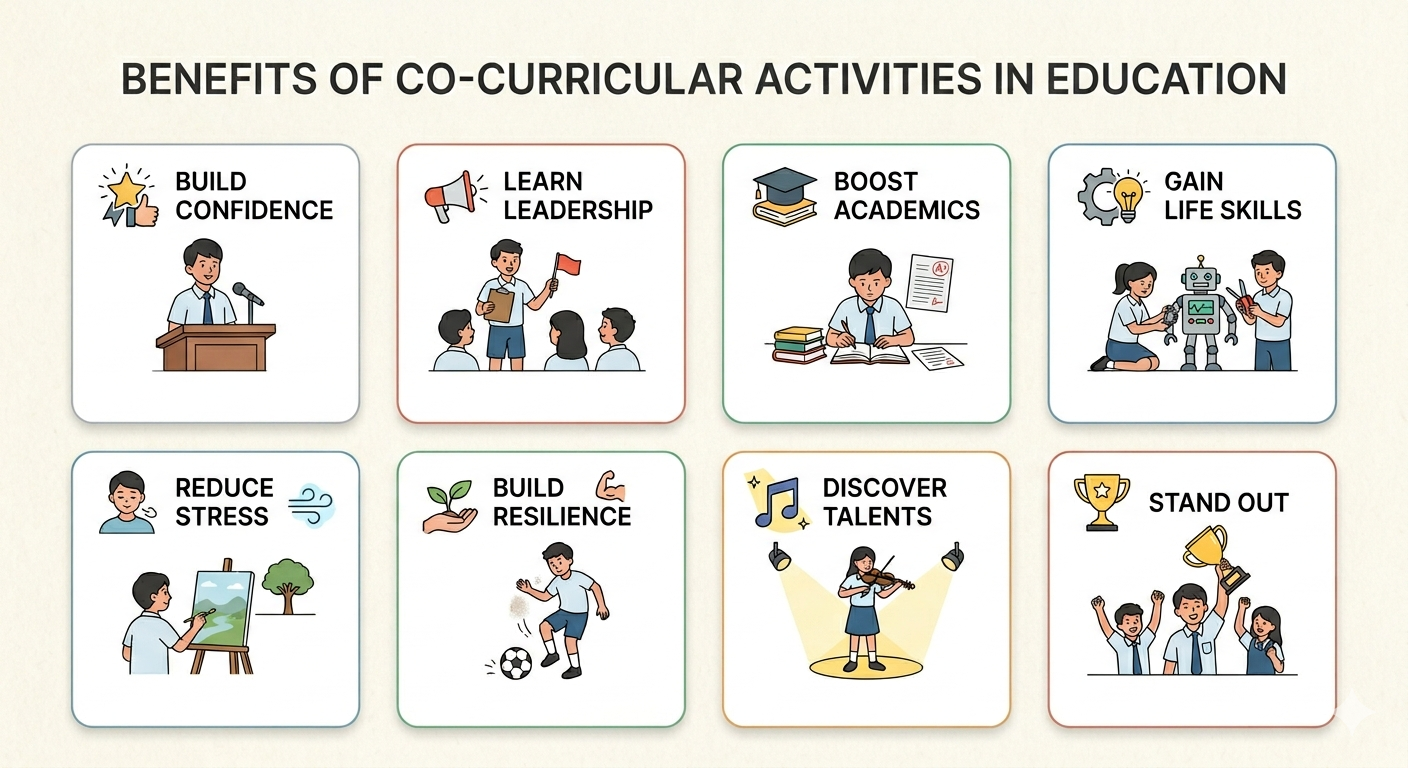
1. They Build Confidence That Academics Alone Can't
2. They Teach Leadership in the Most Practical Way Possible
3. They Actually Improve Academic Performance
4. They Develop Life Skills No Subject Can Teach
5. They Support Mental Health and Yes, That Matters
6. They Build Resilience and There's No Shortcut for This One
7. They Help Children Find Out What They're Actually Good At
8. They Build the Profile That Opens Doors Later
Key Co-Curricular Areas to Look for in CBSE Schools
Conclusion
Your Queries Answered
1. Why are co-curricular activities important in CBSE schools?
2. Do co-curricular activities affect academic results?
3. What co-curricular options should a good CBSE school offer?
4. Do these activities help with a child’s mental health?
5. Do co-curriculars help in college admissions and careers?
